Prime Minister’s Prize awarded for a life-saving therapy for brain injury in newborns
MEDIA RELEASE: TE PŪIAKI PUTAIAO MATUA A TE PIRIMIA SCIENCE PRIZE
A deceptively simple treatment that has prevented severe disability in thousands of newborns worldwide has been recognised as a transformative scientific advance – winning the Prime Minister’s Science Prize.
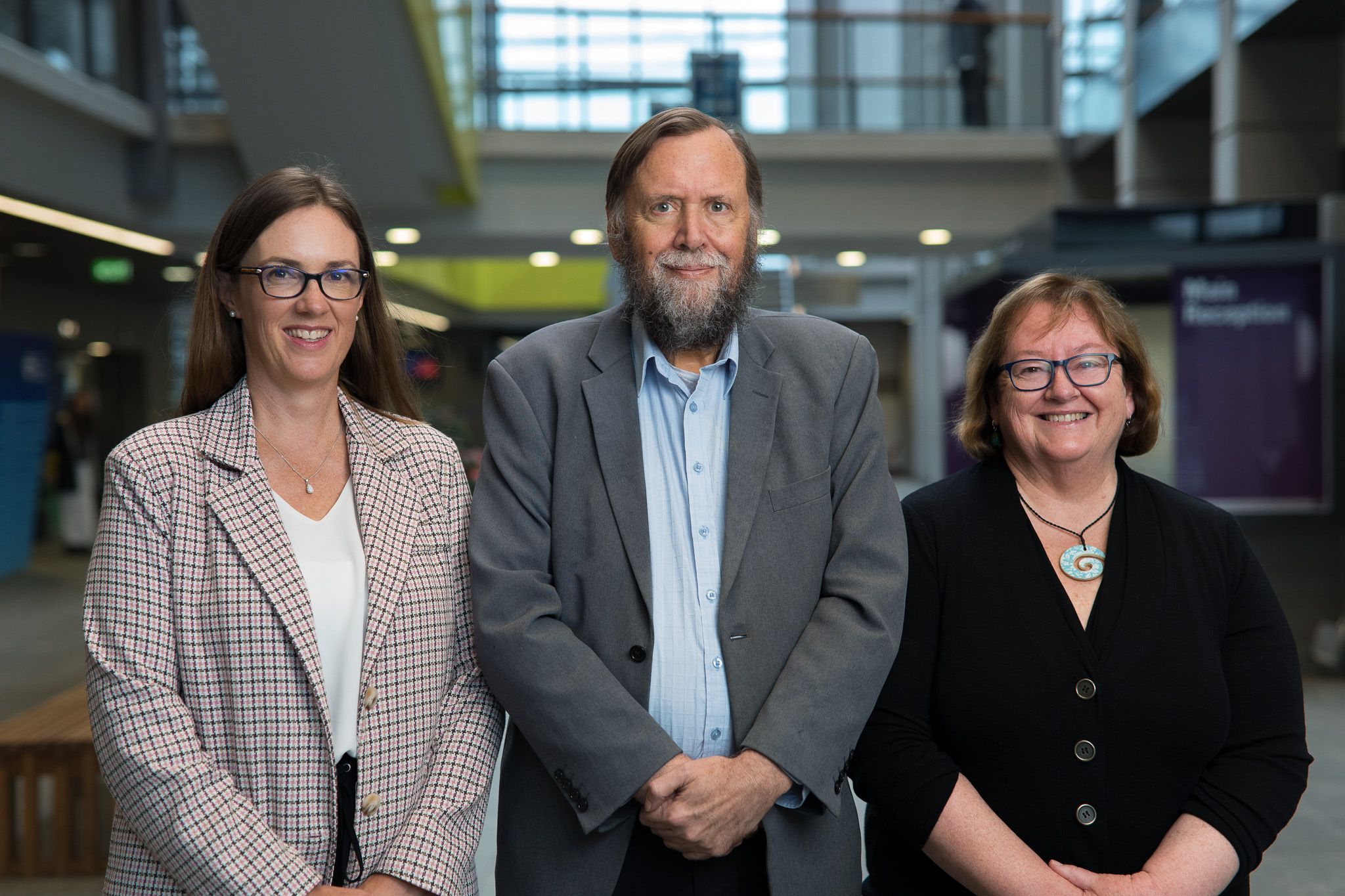
The Fetal Physiology and Neuroscience team, from Waipapa Taumata Rau, the University of Auckland, developed the use of mild cooling as a treatment for brain injury at birth, and this practical and effective treatment is now in routine use in Aotearoa New Zealand and around the world.
The work of the Fetal Physiology and Neuroscience team was co-led by the late Professor Alistair Gunn FRSNZ and Professor Laura Bennet FRSNZ. Sadly, Prof Gunn died in May 2026, before the Prize was formally awarded (although he had been informed).
Worldwide, at least a million babies develop injury due to low oxygen levels at birth every year, and mild cooling is the only proven treatment.
The team provided the first proof that mild hypothermia (cooling) could reduce brain injury – first in animals, then in clinical trials.
In awarding this Prize, the judging panel said that this research changed the standard of care globally, and has prevented severe disability or death for thousands of babies.
The panel commended the “exhaustive process of investigation, testing and development” that resulted in commercialisation of a ‘cooling cap’ device, an economic and safe technology.
“The work of this team has led to a paradigm-shift in neonatal care, with transformative societal outcomes, preventing severe disability for many thousands of babies and significantly reducing healthcare costs.”
Prof Gunn worked for both Starship Children’s Hospital and the University of Auckland. In an interview in late March 2026, he said: “Winning this Prize is a reflection of the last 30 years of work by us, by thousands of people around the world, and it’s also a recognition of the trust that families placed in us at the very beginning, when we had no evidence that it was either efficacious or safe, and yet were willing to trust us to try”.
Prof Gunn began working on therapeutic brain cooling with his mother, the late Professor Tania Gunn, who was also an experienced paediatrician and physiologist. Together, they generated the first proof that hypothermia could reduce brain injury in animals. The team continued this work, collaborating with international partners on clinical trials which established that the best treatment for babies who are affected by low oxygen levels is mild cooling, of only 2.5–3°C.
Associate Professor Joanne Davidson, who joined the research project when she began her PhD, says that mild cooling is likely to work through a variety of different mechanisms.
“It does a little bit of a lot of different things. [One] of the key ways that it works is by stopping cell-death pathways. We know that these develop slowly over the hours and days after the period of oxygen deprivation, and hypothermia can shut them down and prevent a lot of the cells from dying.”
“We also know that hypothermia is really anti-inflammatory. We’re all familiar with putting an ice pack on a sprain or strain in our body. But we can actually have similar inflammatory pathways occurring after brain injury. And the hypothermia is really good at suppressing the negative consequences of this inflammation.”
“There’s a variety of other pathways that hypothermia is also influencing and many of them we probably don’t even know yet.”
The benefits of the treatment for babies who suffered oxygen deprivation are significant, says Assoc Prof Davidson.
“The hypothermia treatment has been shown to reduce all categories of disability and results in a better quality of life in term babies.”
The life-changing impact on these children’s lives was brought home to Prof Laura Bennet at a special ceremony to open the Liggins Institute at the University.
“One of the patients who was first cooled in our first safety trial came and he had grown up to be an energetic little boy, who was running around all over the place,” Prof Bennet recalled.
“We would see these poor babies in such a terrible condition, their parents incredibly distraught, and we can make that difference to their lives.”
“This is the power of taking experimental blue-skies research – because we didn’t know that hypothermia would work – getting the funding and support for it, getting the international collaboration to help us progress the studies.”
The team will use the Prime Minister’s Prize to continue to investigate how hypothermia affects the brain. They’ll also look into the potential benefits of cooling treatment for babies who experience only a minor lack of oxygen at birth, and also to investigate potential treatments for preterm babies with brain injury, for whom the mild cooling protocol is often not suitable.
“Alistair will be greatly missed by the team in the Fetal Physiology and Neuroscience Group as well as the wider scientific community,” says Assoc Prof Davidson.
“Alistair was a great inspiration to his colleagues and to all the students and emerging researchers that he mentored over the years. He was always generous with sharing his extensive knowledge and wisdom, along with his stash of lollies. Alistair will not only be remembered for his vast scientific achievements but also for his warm, humble manner and his good humour.”